Coated Anti-Corrosion Steel Pipe
Polyethylene, polypropylene or epoxy powder applied to the outside and inside of the pipe to extend the service life of the pipeline — for buried transmission lines, coastal installations and internal corrosion or flow duty.
Coating a line for hydrogen service? Read Hydrogen pipeline coating: SFBE, DFBE or 3LPE — how to choose (rapid decompression, cathodic protection and the test records to specify).
Coating systems
- FBE — external epoxy powder hot-melt anti-corrosion coating
- 2LPE / 3LPE — external two-layer or three-layer polyethylene anti-corrosion coating
- 2LPP / 3LPP — external two-layer or three-layer polypropylene anti-corrosion coating, used where higher service temperature is required
- Internal epoxy powder hot-melt coating — for internal corrosion protection
- Internal drag-reducing epoxy coating — to lower flow resistance in the pipeline
Production process
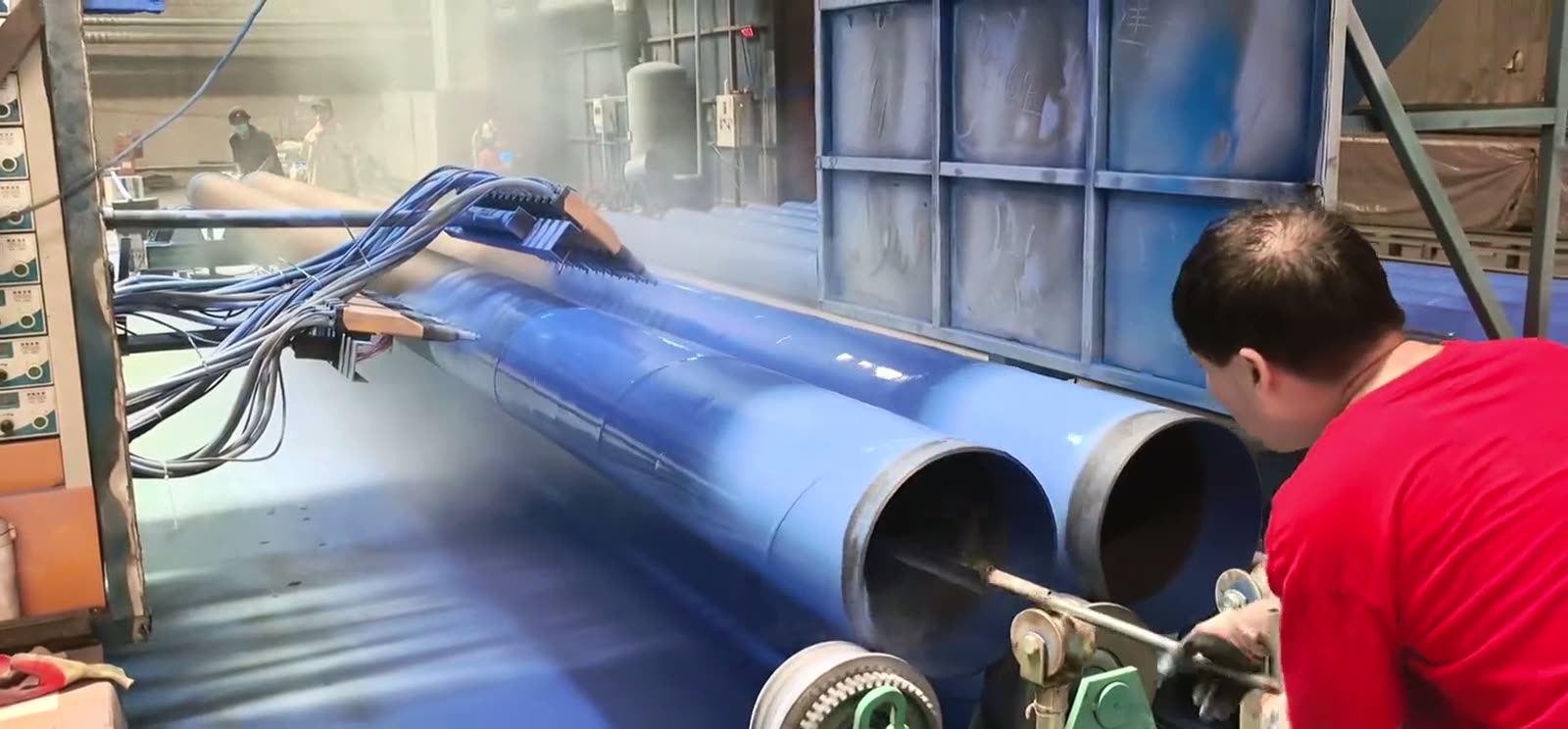
Coating is applied on a fully automated production line that performs internal and external shot blasting, medium-frequency heating, powder spraying, substrate winding, full-length water cooling and pipe-end reservation in one continuous sequence. Surface preparation reaches Sa 2.5, which is the foundation of coating adhesion.
Testing
All anti-corrosion tests — impact test, tensile strength, holiday (electric spark) test, peel strength, cathodic disbondment and indentation test — are completed in a national CNAS-accredited laboratory, so results are issued with the shipment rather than being re-checked on site.
Typical application scenarios
1. Buried gas transmission line, desert environment. 3LPE on API 5L X65 pipe: mechanical protection against backfill damage during installation is the decisive factor, so layer thickness and cut-back length are agreed with the construction method.
2. High-temperature or coastal service. 3LPP is selected where the operating temperature exceeds the practical range of polyethylene, and where the pipeline runs in a saline environment.
3. Internal corrosion or flow duty. Internal epoxy powder coating for water and process service, or drag-reducing epoxy where pumping energy matters.
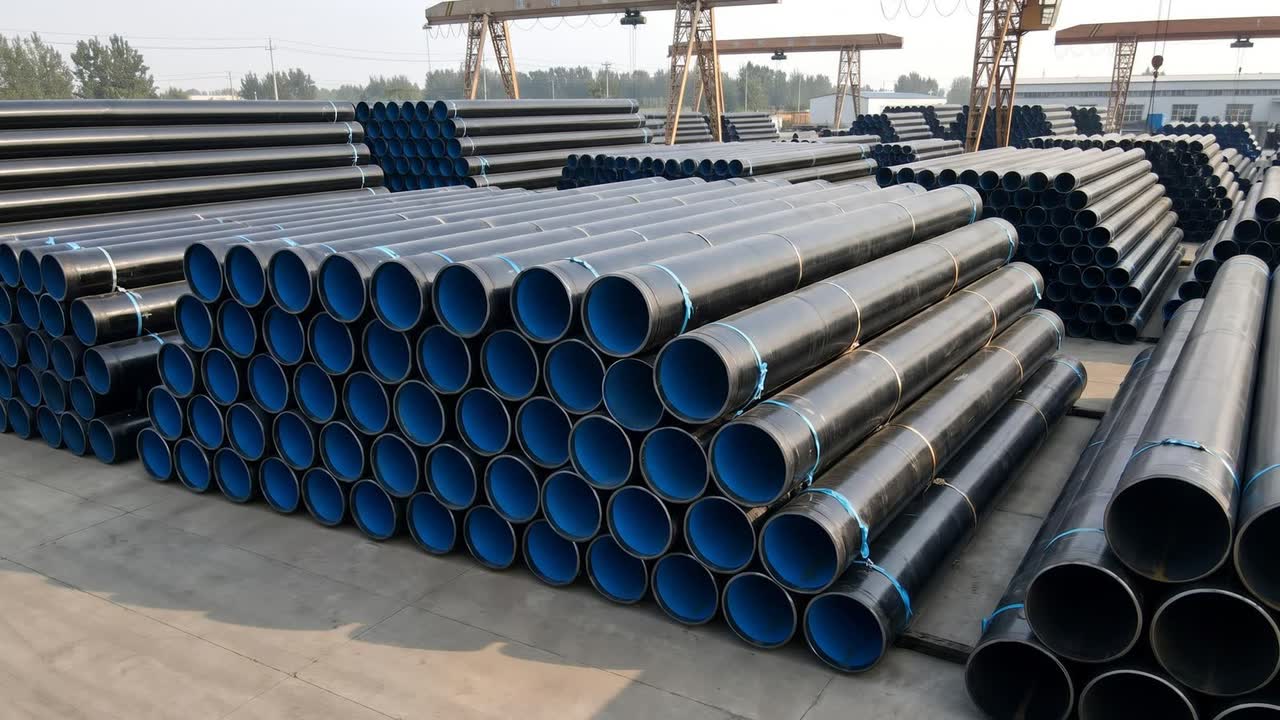
| Base pipe | LSAW (JCOE) line pipe — Ø406 – Ø1422 mm |
|---|---|
| External coating | FBE · 2LPE · 3LPE · 2LPP · 3LPP |
| Internal coating | Epoxy powder hot-melt · drag-reducing epoxy |
| Surface preparation | Internal and external shot blasting to Sa 2.5 |
| Line type | Fully automated: blast → medium-frequency heat → powder spray → winding → water cooling → pipe-end reservation |
| Testing | Impact · tensile strength · holiday (spark) · peel strength · cathodic disbondment · indentation |
| Laboratory | National CNAS-accredited laboratory |
| Reference standards | ISO 21809 · DIN 30670 · CSA Z245.21 (as applicable to the system) |
| Ends | Cut-back and end treatment for field welding |
| Incoterms | FOB / CFR / CIF / DAP |
Coating questions
Which coating system should I specify?
It depends on three things: the operating temperature, whether the line is buried or exposed, and how the pipe will be handled on site. As a rule, 3LPE is chosen for buried onshore pipelines because of its mechanical resistance to backfill damage, 3LPP where the temperature is higher, and FBE where compatibility with the girth weld coating is the priority. Send us the design temperature and the installation method and we will recommend the system.
What is the cut-back and why does it matter?
The cut-back is the uncoated length left at each pipe end so that field welding can be carried out without damaging the coating. It is set to match the welding procedure used on site; the dimension is confirmed with the client before coating.
Do you provide DFT and holiday test reports?
Yes. Dry film thickness and holiday (spark) test reports are issued together with the coating test results from the CNAS laboratory.
Can the coating be applied to pipe we already own?
In practice we supply base pipe and coating together so that the mill certificate, coating reports and loading documents come from one supply chain, avoiding gaps in responsibility if a defect appears. If the pipe already exists, tell us the location, size and quantity and we will advise on the options.
Quote pipe and coating as one package
Send the line size, coating type and total quantity — price, weight and lead time within one working day.