LSAW Process Pipe for Refining & Chemical Plants
Alloy process piping that has to carry high-temperature, high-pressure and low-temperature liquid or gas media — produced to GB/T 9711, API 5L and ASTM A671 / A672 / A691.
What this pipe has to survive
Process piping in a refinery or chemical plant is rarely governed by strength alone. The pipe has to resist high temperature and pressure, corrosive media, and — in cold climates or cryogenic units — brittle fracture at low temperature. Alloy steel is normally used, with the chemistry and heat treatment selected for the duty rather than for a generic grade name.
- High-temperature, high-pressure process lines
- Hydrotreating, reforming and conversion unit piping
- Coal chemical and gasification unit piping
- Low-temperature piping and cold-box service
- Corrosive and hydrogen-containing process streams
Standard grades and temperature capability
Typical specification: ASTM A691 2¼Cr CL32 S2 (-29 °C) ASTM A671ASTM A672 API 5LGB/T 9711
Low-temperature impact requirements are commonly specified at −29 °C or −46 °C, and can be taken further: pipe manufactured from 09MnNiDR plate has been welded and qualified for −70 °C service.
Track record
09MnNiDR steel pipe produced for −70 °C limit working conditions was successfully welded and delivered to a Xinjiang coal chemical project and passed the acceptance test — an application where low-temperature toughness, not tensile strength, is the governing criterion.
What to send for a quotation
- Piping class or line list with design pressure and design temperature
- Grade or material specification, and impact test temperature
- Size (OD × WT) and quantity
- Corrosive medium, if relevant, and any HIC / SSC requirement
- Heat treatment or PWHT requirements
- Inspection level and third-party inspector
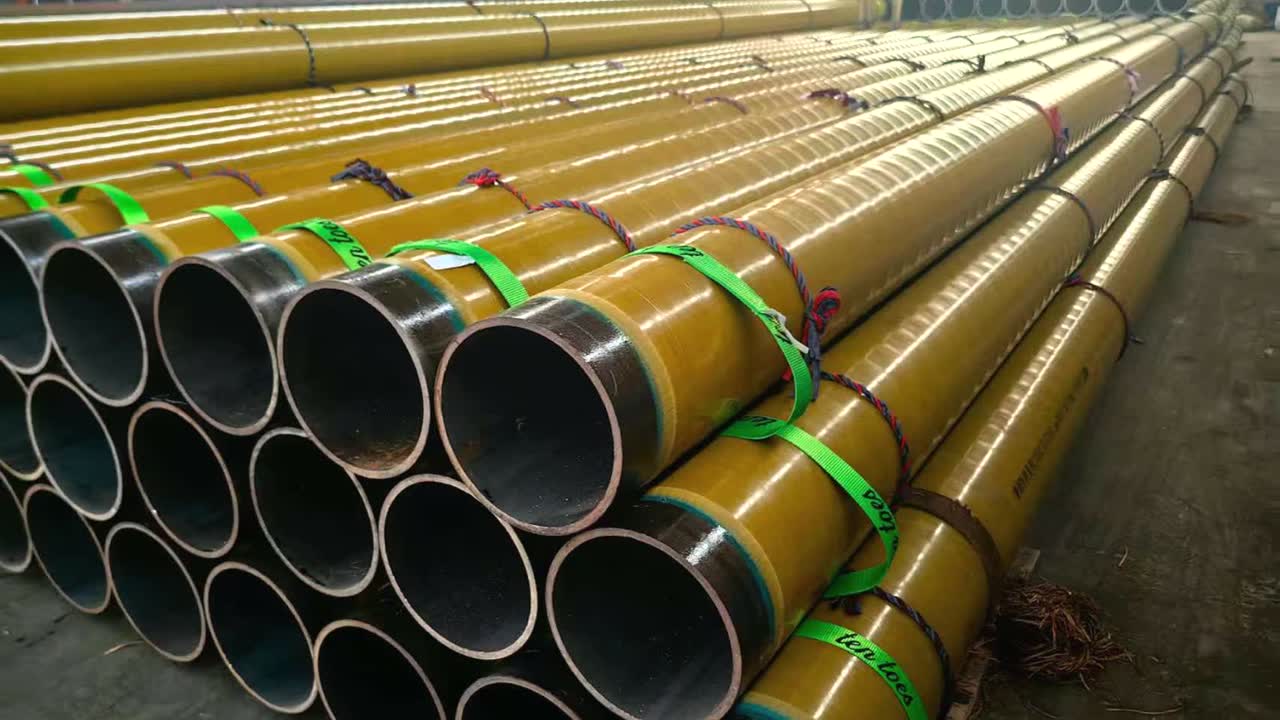
| Product | LSAW (JCOE) submerged arc welded process pipe |
|---|---|
| Standards | ASTM A671 / A672 / A691 · API 5L · GB/T 9711 |
| Typical alloy | ASTM A691 2¼Cr CL32 S2 (−29 °C) |
| Low temperature | 09MnNiDR qualified to −70 °C in a coal chemical project |
| Outside diameter | Ø406 – Ø1422 mm (16" – 56") |
| Wall thickness | 6.35 – 52.37 mm, depending on diameter and grade |
| Heat treatment | Normalising, tempering or as specified, with records |
| Testing | Tensile, impact at specified temperature, hardness, chemistry, NDT |
| Ends | Beveled for field welding, or as specified |
| Documentation | EN 10204 3.1 mill certificate and test reports |
| Incoterms | FOB / CFR / CIF / DAP |
Three duties we are asked about most
Coal chemical, low temperature
09MnNiDR pipe for −70 °C limit conditions, where impact toughness and weldability decide acceptance. Welding procedure and impact testing are agreed before production.
Refinery high temperature
2¼Cr alloy pipe to ASTM A691 CL32 with impact testing at −29 °C, for high-temperature, high-pressure process lines in hydrotreating and conversion units.
Corrosive process streams
Alloy selection together with heat treatment and hardness control; where the medium is aggressive, a bimetallic clad pipe with a stainless liner can be more economical than solid alloy.
Process pipe questions
Can you supply welded pipe for low-temperature service?
Yes. Low-temperature impact is achieved through plate chemistry and controlled welding and heat treatment, and is verified by testing at the specified temperature. Pipe from 09MnNiDR plate has been qualified and delivered for −70 °C service.
Do you provide heat treatment records?
Yes — normalising and tempering records, and where the project requires it, simulated post-weld heat treatment data, are provided with the mill certificate.
Is a bimetallic clad pipe an option for corrosive duty?
Often yes. A stainless or alloy liner bonded to a carbon steel body gives corrosion resistance at the wetted surface with the strength and cost of carbon steel. See the bimetallic cladding pipe page.
Send the piping class or line list
You will receive material confirmation, weight and price within one working day.